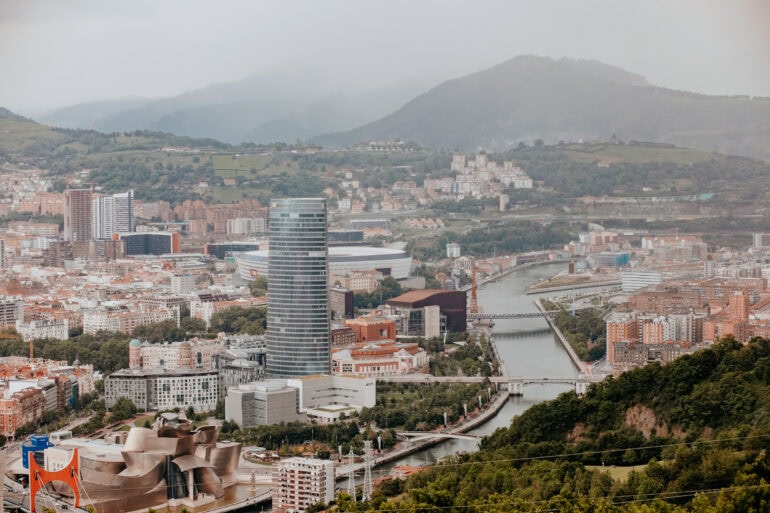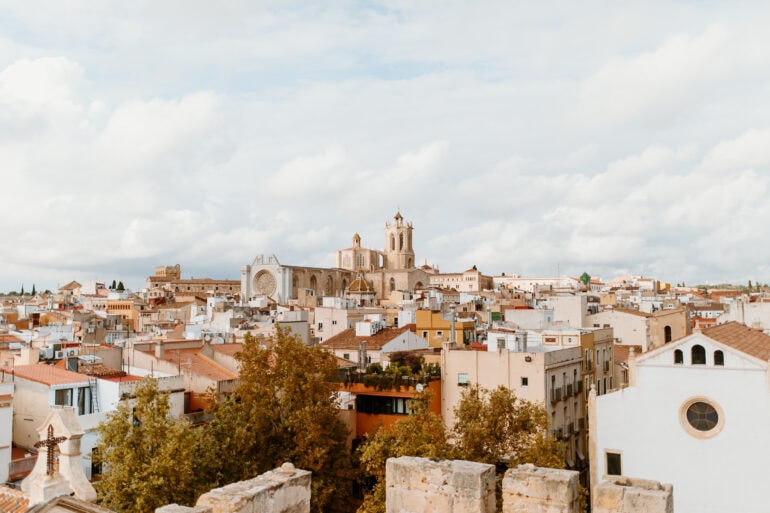
Reus is my insider tip for a city break in Spain: exciting architecture, great food spots and lots of culture.
The city of Reus in Spain is a real treasure! A hundred kilometers from Barcelona, you will find a place with a lot of history, great architecture and great spots for foodies. In any case, I was immediately hooked by the lovely town of Reus and would recommend it any time as a city trip in Spain!

What to see in Reus
The city center of Reus is dominated by Modernist buildings and the flair of a once very rich commercial city. In addition, Reus is still the absolute shopping destination in the south of Catalonia. If you love cozy alleyways, old building architecture and small boutiques, this is the place for you. And although Reus, with its 100,000 inhabitants, seems like a village next to a city like Barcelona, there are many interesting sights here.
Looking for more inspiration for your trip?
Here you can find all my tips for Catalonia

Hey, I’m Tatiana & the blogger behind The Happy Jetlagger. I write honestly, passionately and authentically about my travels. All tips have been researched by myself!
Plaça Prim
At Plaça Prim, you can see the important role Reus once played as a trading center in Catalonia. The pompous arcades along one side give the square a truly stately flair! The square is named after General Joan Prim i Prats, who was born in Reus and fell victim to an assassination attempt in 1870 during his later office as Spanish Prime Minister.

Especially worthwhile here is a visit to the Teatre Fortuny, which should look just as glamorous from the inside, as I was told. Guided tours are not available, but maybe you’re in the mood for a concert or an operetta?

Unfortunately, not all of the buildings from Reus’ heyday at the beginning of the last century on Plaça Prim have been preserved. Where high society once met in the Gran Hotel de Londres, there is now an unadorned building from the 1970s. That’s a shame, but you should still take in the elegant atmosphere of the square.
If you want to get a feel for what Reus used to look like here, it’s worth visiting Foto Niepce. In this photo store on Plaça Prim, founded in 1926, you’ll find a small photography museum with pieces from the history of this traditional family business.
Plaça del Mercadal
The Plaça del Mercadal is another central point in the center of Reus. Here you will find the City Hall, the Gaudí Centre and the opulent Casa Navàs.


If you want to take a little break, here’s the perfect opportunity! My café tips:
Roslena Modern café with self-service and affordable snacks, but at the same time a well-stocked magazine store! Located next to the Gaudí Museum.
Café de Reus Located a bit off Plaça del Mercadal, but you can hardly miss it with its red facade. Great location for drinks & tapas, in the evening there’s also sometimes live music.

Advertising / *affiliate link
Modernism in Reus
Buildings worth seeing from the Modernisme period in Reus include Casa Navàs, the Pere Mata Institute, Casa Rull and Casa Gasull. Most of the buildings were designed by Lluís Domènech i Montaner, another famous representative of Modernism along with Gaudí.
If you’re as interested in architecture as I am, you can book a special architecture tour at the tourist information office in Reus, which will take you to and inside many buildings that you wouldn’t otherwise have seen!


Or you can follow the “Ruta del Modernisme” on your own: 29 of the almost 80 Modernisme buildings have been combined into a tour. You can get the map at the tourist information office in Plaça del Mercadal.
What is Modernisme?
The architectural style of Modernisme emerged in Catalonia between 1885 and 1920. Similar to Art Nouveau, which emerged in parallel in Germany, Modernisme is characterized by novel curved lines and organic forms. Modernisme, however, was not only a style of architecture, but also a social movement that spanned all areas of life such as art, culture, and politics. One of the most famous architects of this era is Antonio Gaudí.
Casa Navàs
Built between 1901-1907, Casa Navàs is one of the best examples of the Modernist architectural style. The merchant Joaquim Navàs lived here with his wife on the upper floors, and on the first floor was the family department store until 2018, which now serves as an event location after a change of ownership. The upper floors are still furnished with the original furniture. You can visit Casa Navàs as part of a guided tour.


Personally, I love the playful style of Modernism, but at the same time the vibe of an era in which so much has changed in the whole world in terms of culture and society. In Barcelona, I was always very taken by the wealth of detail in houses such as Casa Milà, and I don’t know anyone who isn’t fascinated by the architecture there. At Casa Navàs, however, my jaw dropped by excitement. The dedication with which the entire house was designed can be felt in every room.


Just for the Casa Navás a trip to Reus is worth it! As soon as you enter the stairwell, you realize that you are entering a very special house. My tip: Ask for a tour with Ben – his love for the house is absolutely contagious and he’s a natural as a museum guide! Once I’d got my jaw dropped, I couldn’t stop laughing because the tour with him was so entertaining.
Gaudí Centre
The city’s most famous son, Antonio Gaudí, has an entire museum dedicated to him in Plaça del Mercadal. Although Gaudí was born in Reus and spent his entire childhood and youth here before moving to Barcelona, there is not a single one of him in the city of his birth. This is in stark contrast to Barcelona, where he played a major role in shaping the city’s appearance with buildings such as the Sagrada Familia, Casa Milà, Casa Batlló and Parc Güell.

The Famous Vermouth of Reus
If you’re in Reus, you should definitely try a vermouth. The white wine mixed with herbs and sugar is the traditional drink of the city. In the 19th century, vermouth and the trade in it brought wealth to the town. Around Reus today there are still eight different vermouth producers.

Eating & Drinking in Reus
Even if you haven’t become a fan of vermouth (with its herbal taste, it’s not for everyone), I recommend Vermuts Rofes in Reus. Once vermouth was produced here, now the former manufactory has become an atmospheric restaurant.
Tip: Walk through to the inner courtyard! Here you can try typical Catalan dishes at large, rustic industrial-style tables. And if you wish, treat yourself to a glass of the company’s own vermouth, because Vermuts Rofes is still being produced, just in a different, modern location.


Shopping in Reus
Reus is still the first port of call for the surrounding region when it comes to shopping. In the narrow pedestrian streets of the city center, you will not only find the usual suspects such as Mango and Zara, but also a surprising number of small boutiques and family-run stores.
Colmado Baró
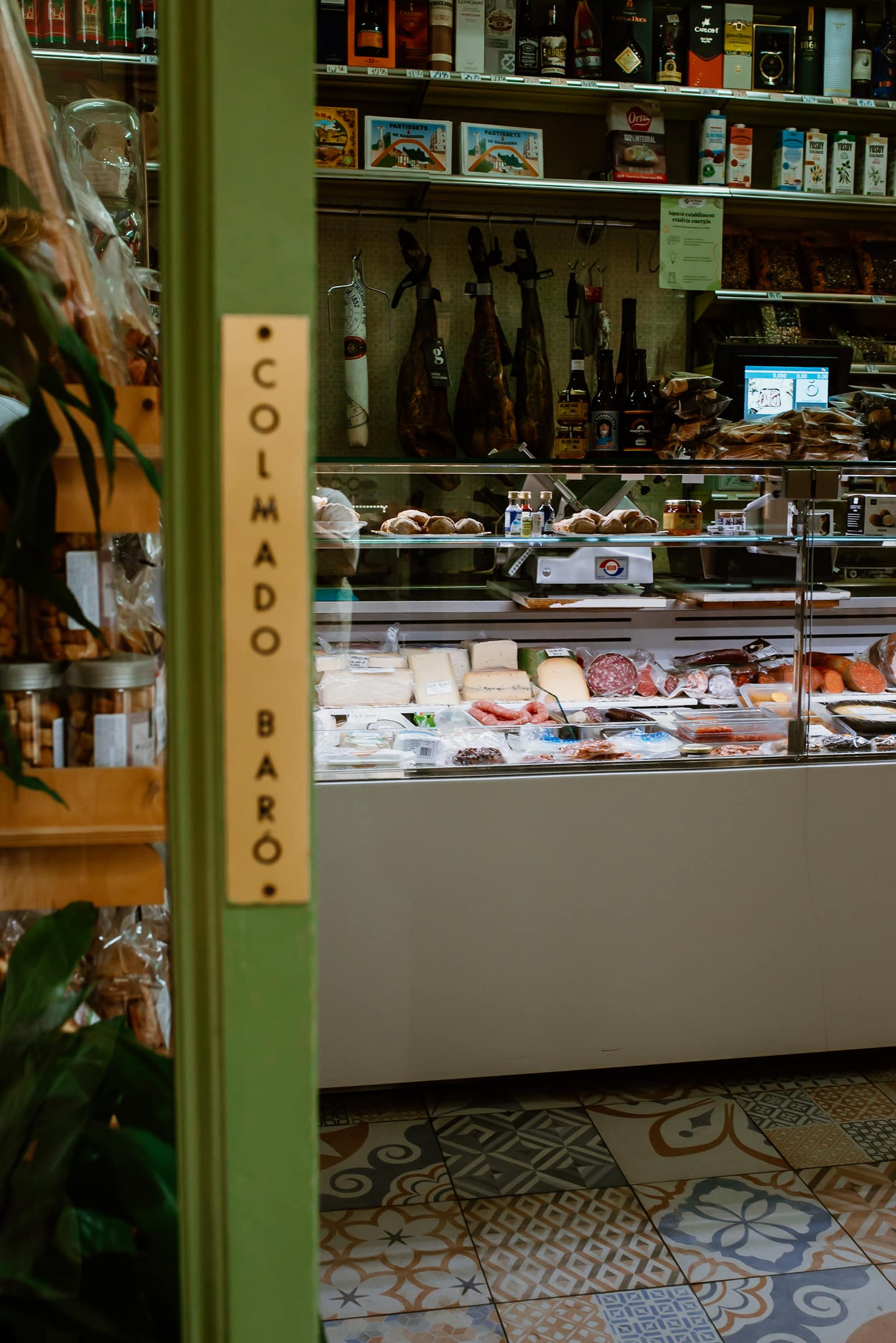
At Colmado Baró you can stock up not only on vermouth, but also on many other typical goodies. Still family-run, this delicatessen has a very special charm. The perfect opportunity for culinary souvenir shopping!

El Barato
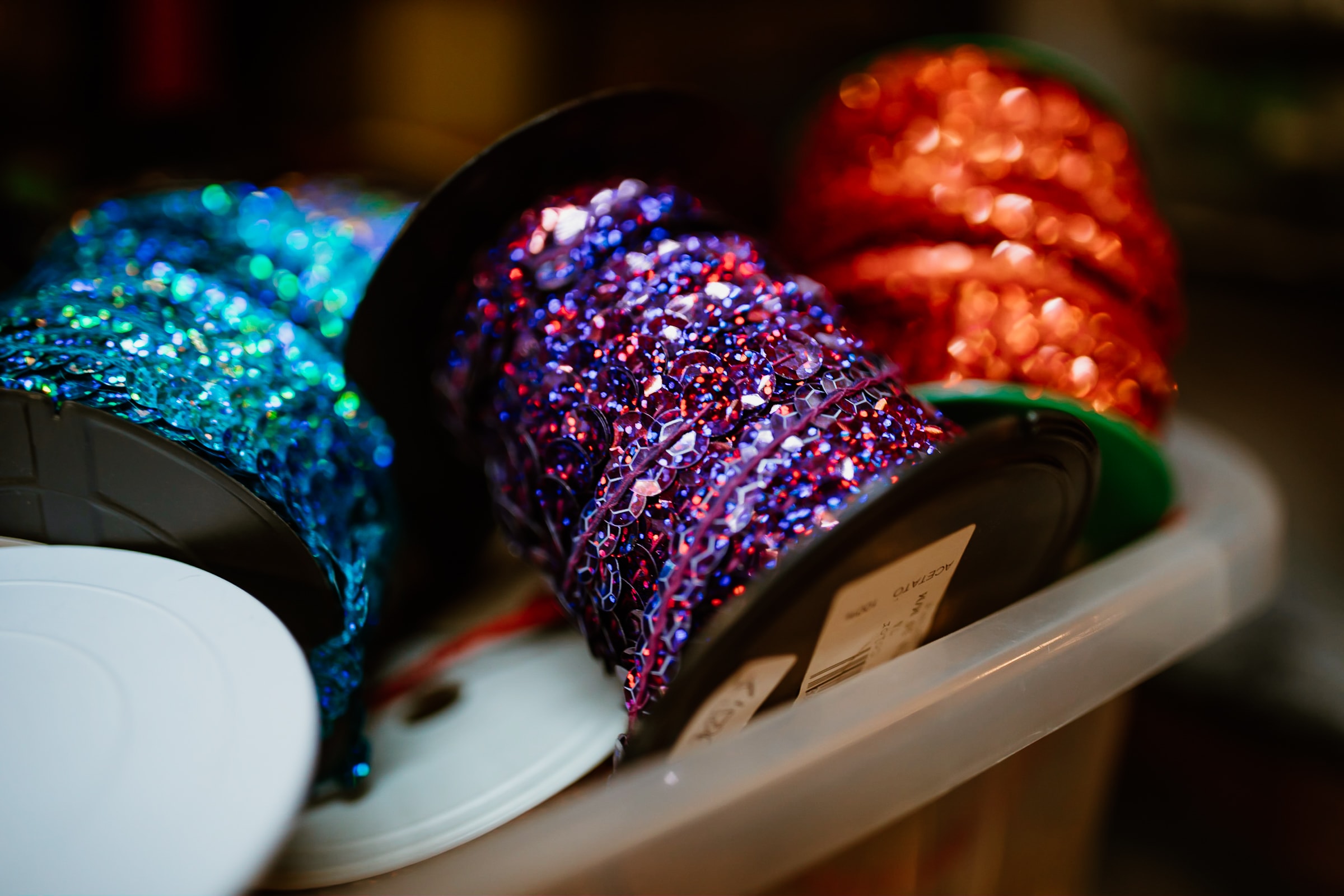
The stylized O behind the name El Barato is reminiscent of the time of the military dictatorship under General Franco: back then, the traditional fabric store had to drop its Catalan name “Barat” and change its name to the Spanish version “El Barato”. Then as now, hobby tailors, designers, artists, folklore groups and carnival clubs stock up on the wildest fabrics here – and probably spend whole days browsing through the overflowing shelves.


Want to spend several days in Reus?
Here you will find beautiful small boutique hotels*
How to get to Reus
What is the best way to get to Reus?
Perhaps Reus might sound familiar to you: It has an airport that is mostly served by low-cost carriers & very popular for reaching the beaches of the Costa Daurada. This is often advertised as Barcelona-Reus, although Barcelona’s actual airport El Prat is almost a hundred kilometers away. However, most airlines only fly to Reus from spring to fall.
The most practical option is therefore a flight to Barcelona. So you can connect both cities!
How to get from Barcelona to Reus
From Barcelona, the best way to get to Reus is by regional train or by bus if you are traveling without your own car or rental car. The route can also be easily driven there and back in one day. Reus is therefore also perfect for a day trip from Barcelona!
➜ Check the timetable here & buy tickets for the bus
➜ Check the timetable for the regional train
➜ For more flexibility: Book a rental car from Barcelona*
What else can you see in Catalonia?
If you are traveling by car or rental car, I can highly recommend a tour through the hinterland of Catalonia. If you like being out in nature or hiking, you will find great opportunities here. It’s also not far to the Pyrenees, where you can go skiing in winter.
Catalonia also has other popular coastal resorts. The Costa Brava and the Costa Dorada are dotted with beautiful beaches, e.g. around Cambrils. Or you can simply drive further south along the Spanish coast. In the north of Catalonia, France is already close by, and it is only 170 kilometers from Barcelona to beautiful Perpignan.

The entire coastal region is also easy to travel by train. If you have more time and don’t want to drive yourself, you can plan a great trip through Spain and France.
➜ Check train connections of Renfe here (Spanish railroad company)
More inspiration for your trip Catalonia:
Road Trip through Catalonia
Cambrils: A Cute Coastal Town on the Costa Daurada
Tarragona: Highlights in the City of the Famous Castellers
Note: This research trip was supported by Catalonia Tourism.
*Links marked with an asterisk (*) are affiliate links. If you book or buy something through them, I will receive a small commission. Thank you for your support!